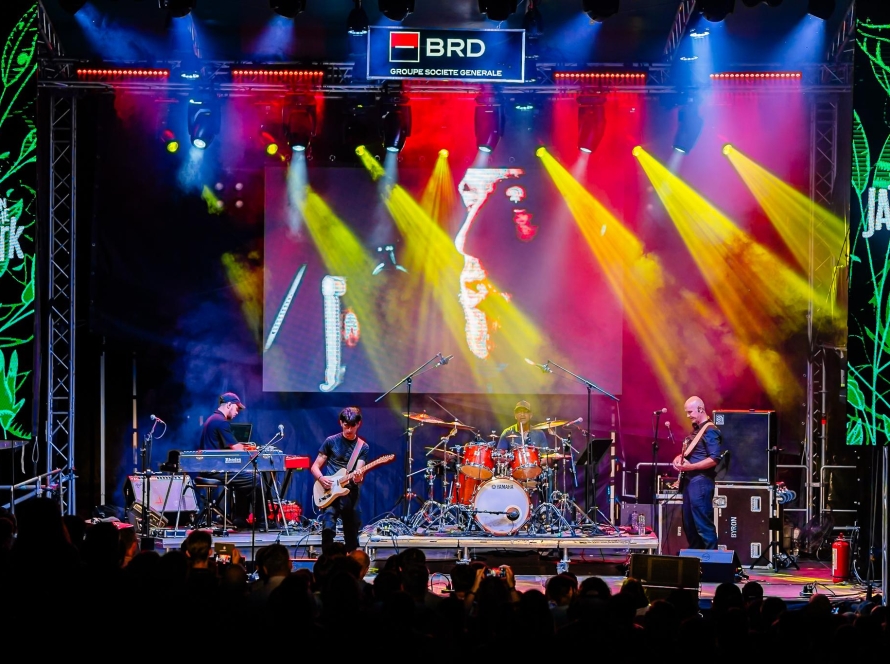
There are artists who grow old, gracefully or not. And then there is Marcos Valle, who at 83 seems to grow younger with every note.
For him, the idea of retirement feels as foreign as silence in a warehouse where a samba school is preparing for carnival. Standing at the threshold of his eighties, Valle looks ahead like a beginner ready to start a new game, not like a veteran carefully counting his steps.
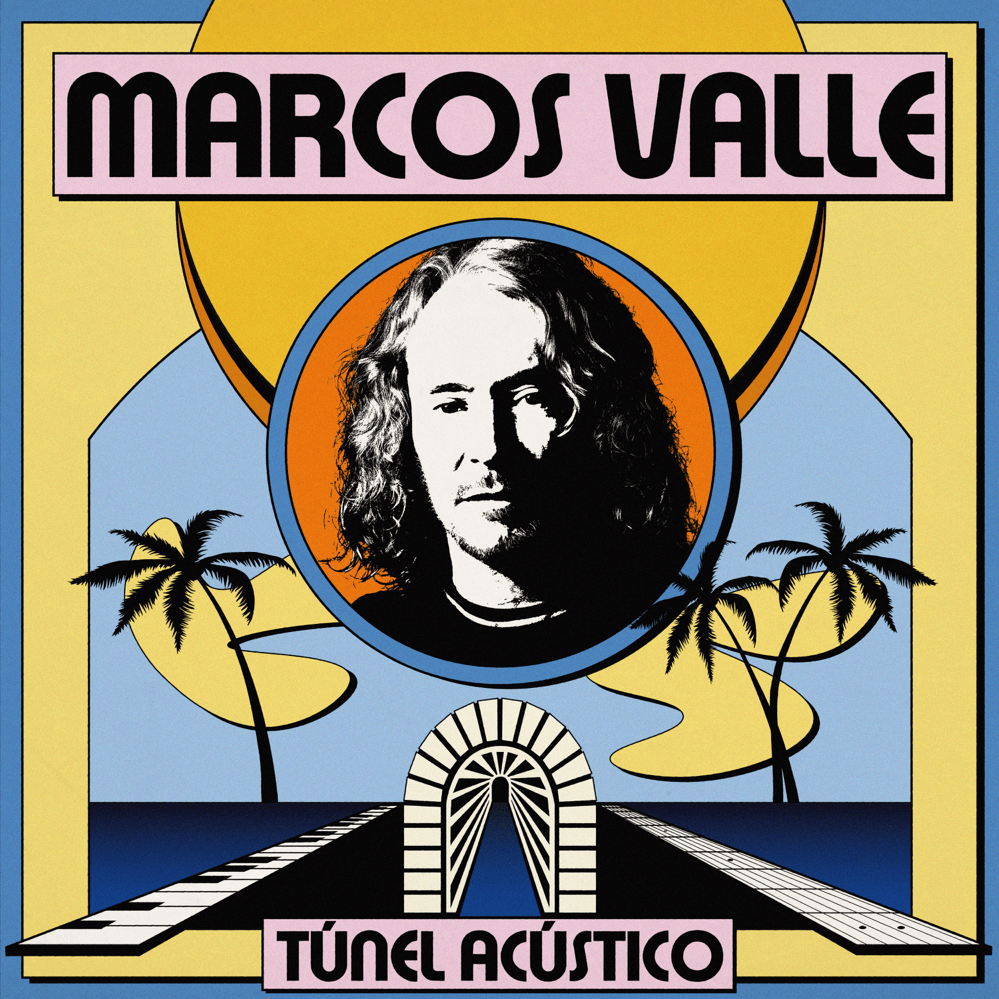
After having to postpone his 2025 visit, he returns to us in 2026, when he will perform at Jazz in the Park. On September 20, 2024, he released Túnel Acústico, his 23rd album — a warm and deeply human confession about a life lived in rhythm with beauty.
Valle seems surrounded by a quiet, discreet light — the kind that belongs to those who have seen much, but still carry within them the resources to celebrate. His extraordinary ability to uncover melodic richness has shaped a career filled with memorable compositions, making any of his concerts — regardless of the decade — a source of color, warmth, and an almost contagious sense of joy.
More than that, artists such as Frank Sinatra, Tom Jobim, Sarah Vaughan, Chicago, Airto Moreira, Leon Ware, Elis Regina and Sérgio Mendes have taken his compositions and turned them into standards.
If you want to begin discovering him — and at the same time feel a warm, round sun — listen to Samba de Verão. It is time we understand who Marcos Valle is, because artists of this scale rarely cross our path.
From bossa nova to a boundless musical language
In the 1960s, Marcos Valle stood at the very peak of the bossa nova wave, writing music in that unmistakable style — elegant, relaxed, rhythmically airy, and harmonically refined. But the 1970s opened a different horizon. Over that decade, Valle composed film scores, explored progressive rock, soul, acoustic and electric jazz, psychedelia, pop — everything that seemed to vibrate in the air at the time.
He worked with bands such as Som Imaginário, O Têrço and Azymuth (a name he himself gave them), pushing bossa nova into a new territory — one of rare poetic freedom. His music became a map of a deeper Brazil — beyond clichés, larger than history itself. The military regime forced him, for a time, into the United States, where he continued to produce — for himself and for a wide range of popular artists. Then came silence. Or almost silence.
And then, in 1994, Valle found his voice again — in a way that felt mature, yet as light as a Copacabana breeze at sunset. And perhaps that is why we love him: because when you listen to him, you feel that the world is not only what it is, but also what it could be.
The early light: defining an artistic identity
At the very beginning of Marcos Valle’s career, there is a particular kind of light.
Before his name became associated with musical revivals, transatlantic collaborations, and influences that would travel from bossa nova into jazz, funk, and soul, there were two albums that quietly set the direction of his destiny: Samba Demais and O Compositor e o Cantor.
Listening to them today, they feel not just like the first chapters of an artistic journey, but like an identity card — the early signature of an artist destined to carry Brazilian music into a universal language.
Braziliance! — light, rhythm, and the beginning of everything
Braziliance! (1967) carries one of the most meaningful titles in Brazilian music. An invented word — and yet one that says everything: Brazil, light, brilliance, exuberance. The album opens a window into a world where bossa nova still holds its grace, but begins to reflect something new — pop influences, modernity, a quiet sense of vision. It is a record that captivates instantly and, in many ways, the perfect entry point for anyone who wants to understand Marcos Valle.
Across the album, Valle reveals his compositional mastery with a kind of effortless elegance. The clearest example is Samba de Verão — the anthem of an endless summer, one of Brazil’s most beloved songs (alongside Águas de Março), later transformed into So Nice (Summer Samba) in the voice of Astrud Gilberto, but present here in its full original glow.
Then comes Os Grilos — a melody that stays with you instantly, carried by an elastic rhythm and a freshness that lingers like a memory from a warm evening. Later, Valle would reshape it into Crickets Sing for Anamaria.
Braziliance! remains, perhaps, his most widely recognized album — not only because the compositions unfold so beautifully, but because the record breathes in a way few artists manage so early in their careers.
It is a perfect synthesis between classic bossa nova and the baroque pop language Valle would continue to explore.
Crossing borders, changing languages
His evolving sound — more Americanized, yet guided by instinct and taste — was not a loss, even if some Brazilian audiences criticized it (as happened with Sérgio Mendes), but rather a transformation.
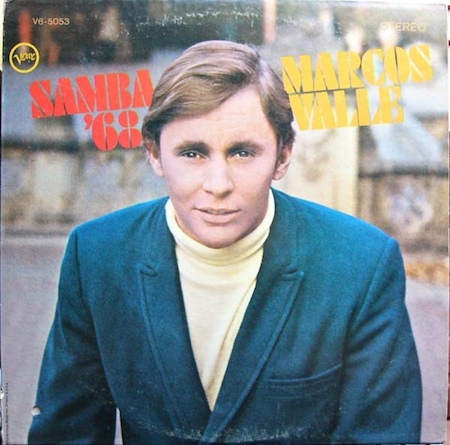
Valle was simply expressing himself in another musical alphabet. His universe had grown beyond geography. That is why Samba ’68 remains one of the most accomplished crossover albums of its time.
The 1970s: transformation, risk, and freedom
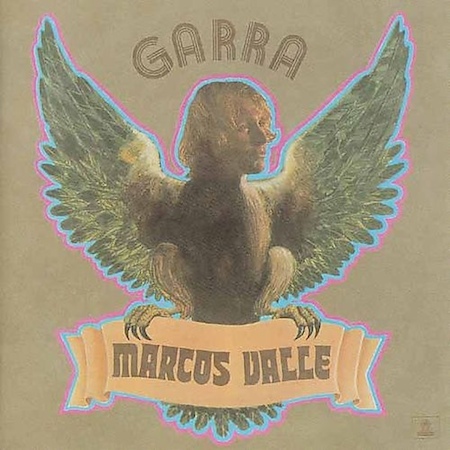
As the decade changed, so did Marcos Valle — like any truly modern artist, tuned into the present moment. The 1970 album Marcos Valle becomes the first bridge toward his future sound. Here, bossa nova is already more of a suggestion, woven into funk, pop, and early electronic impulses. Working alongside Som Imaginário, Valle enters a prolonged period of transformation. Everything points toward a shift, a leap. That leap arrives with Garra (1971) — the album where his new direction becomes fully visible.
Garra is the point from which everything can be seen at once:
- the freedom of funk
- orchestral refinement
- psychedelic mystery
- and, at the center of it all, his Brazilian soul — intact, dense, and warm
Two directions, one expanding universe
After the creative explosion of Garra, Marcos Valle enters one of the most fertile and daring periods of his career.
In the early 1970s, he moves decisively away from the familiar territory of bossa nova and sophisticated pop. Two complementary directions begin to unfold:
- one more introspective, born from retreat and artistic freedom
- the other modern, electronic, rhythm-driven — developed alongside musicians who would later become known as Azymuth
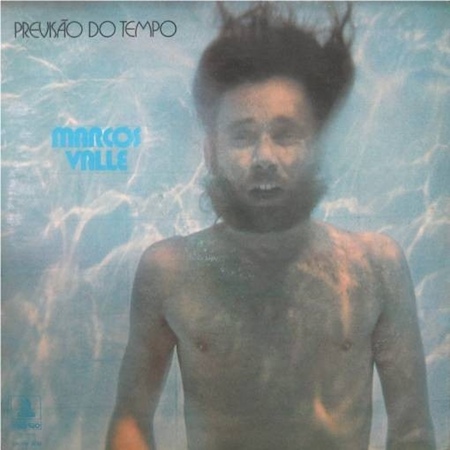
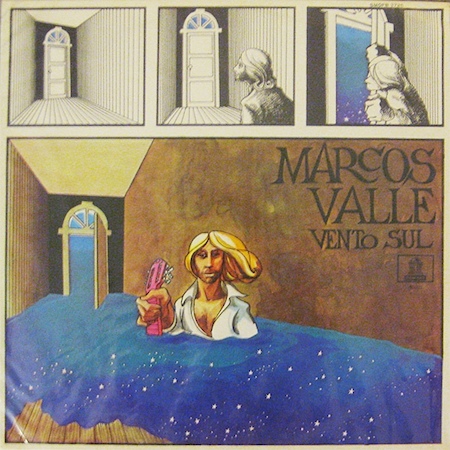
Vento Sul (1972) and Previsão do Tempo (1973) stand as milestones of this transformation — two albums that reveal the surprising breadth of the sonic world Valle was capable of imagining.
The 1980s: groove, city, and reinvention
At the beginning of the 1980s, Marcos Valle steps into a new phase, shaped by boogie, modern funk, and a brighter, more polished aesthetic influenced by his time in the United States.
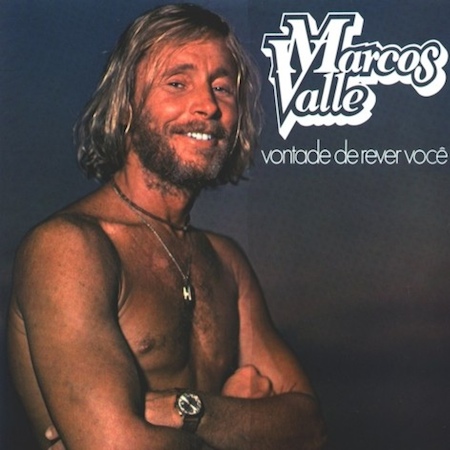
Vontade de Rever Você (1981) becomes the gateway into this new decade — an album that preserves his compositional sensitivity, while dressing it in a completely different sonic language: warm synthesizers, elastic grooves, rounded basslines, and an urban, nocturnal atmosphere. It is, in many ways, a pivot album — capturing the exact moment when a great composer reshapes his universe for a new era, after more than a decade of relative silence.
The 1990s: a return that redefines relevance
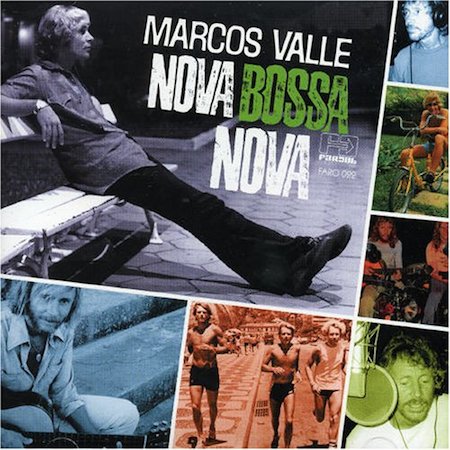
With Nova Bossa Nova (1998), Marcos Valle doesn’t simply return — he redefines his place within contemporary music. It is his first internationally released album since the late 1960s and one of the most remarkable comebacks in South American music.
While many of his contemporaries, such as Gilberto Gil and Caetano Veloso, moved toward more traditional or introspective directions, Valle proves himself deeply connected to the global scene. The album absorbs influences from acid jazz and drum’n’bass, integrating them into a musical language that remains, at its core, unmistakably Brazilian.
It is mature, inspired, and impeccably produced and a beautiful confirmation that a legendary artist can still evolve with intelligence and grace.
A continuous present: from Estática to Túnel Acústico
After his luminous return in the 1990s, the following decades allow Valle to refine his language even further — integrating jazz-funk, acid jazz, and contemporary electronic aesthetics with the same natural ease with which he once blended bossa nova and orchestral pop.
In this context comes Estática (2010), an album that proves Valle, more than 40 years after his debut, still looks forward with genuine enthusiasm. It is modern, dense, and rhythm-driven, a record where electronic textures do not overshadow the organic core, but rather enhance it.
Then comes Túnel Acústico (2024), his 23rd studio album, a work that confirms the vitality of his artistic path. This is not a retrospective album.
It does not attempt to summarize past glory, even if it carries echoes of it.
Instead, it feels deeply present, personal, fulfilled, and surprisingly fresh.
Recorded alongside collaborators such as Daniel Maunick and members of Azymuth, the album continues a clear aesthetic line while opening new possibilities. It shows not only where Valle has been but, more importantly, where he can still go.
Why Marcos Valle matters
If there is a thread running through more than six decades of his career, it is his rare ability to turn time into an ally, not a limitation. Marcos Valle is one of those rare artists who cannot be placed within a single era. He moves through decades, styles, scenes, and generations with a naturalness that almost defies logic.
From classic bossa nova to funk, from orchestral pop to fusion, from acid jazz to modern electronic music, Valle has never treated music as a fixed territory — but as an open space where he can continuously reinvent himself without ever losing his identity.
That is what makes him essential. Not only for Brazilian culture, but for global music. His influence — sometimes subtle, sometimes unmistakable — can be felt today across jazz, soul, pop, electronic music, and hip-hop. In samples, reinterpretations, and in the very way groove is understood today.
He is a complete creator. And perhaps what is most remarkable is not only the quality of his work, but its continuity. To create with freshness at 20 is natural. To create with the same vitality at 80 is something close to a miracle.
Marcos Valle has never aged artistically. Each new album, in fact, explains why the previous ones have remained relevant. And that is why it matters that we know who he is. Because Marcos Valle is more than a name in the history of bossa nova, he is a bridge between eras, between aesthetics, between worlds.
To discover him is to better understand how music has been shaped over the past six decades. And to experience one of his concerts is, simply, to feel happy and a little bit lucky.
Written by Berti Barbera